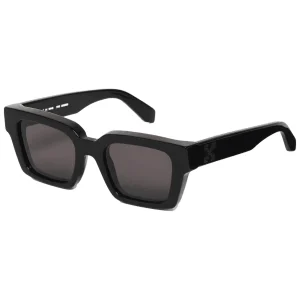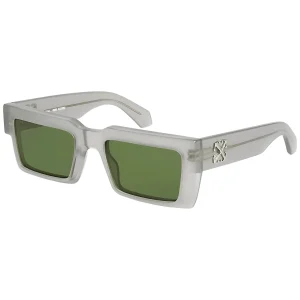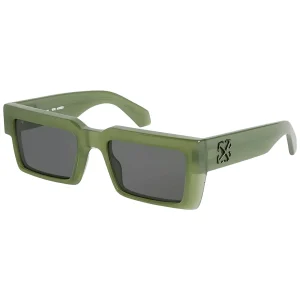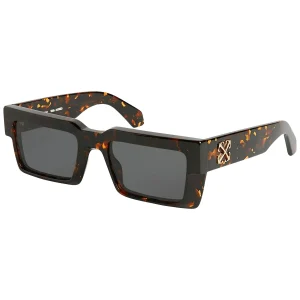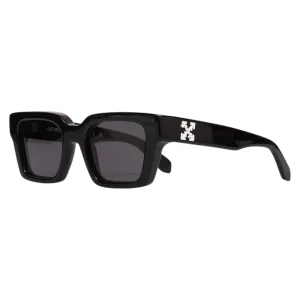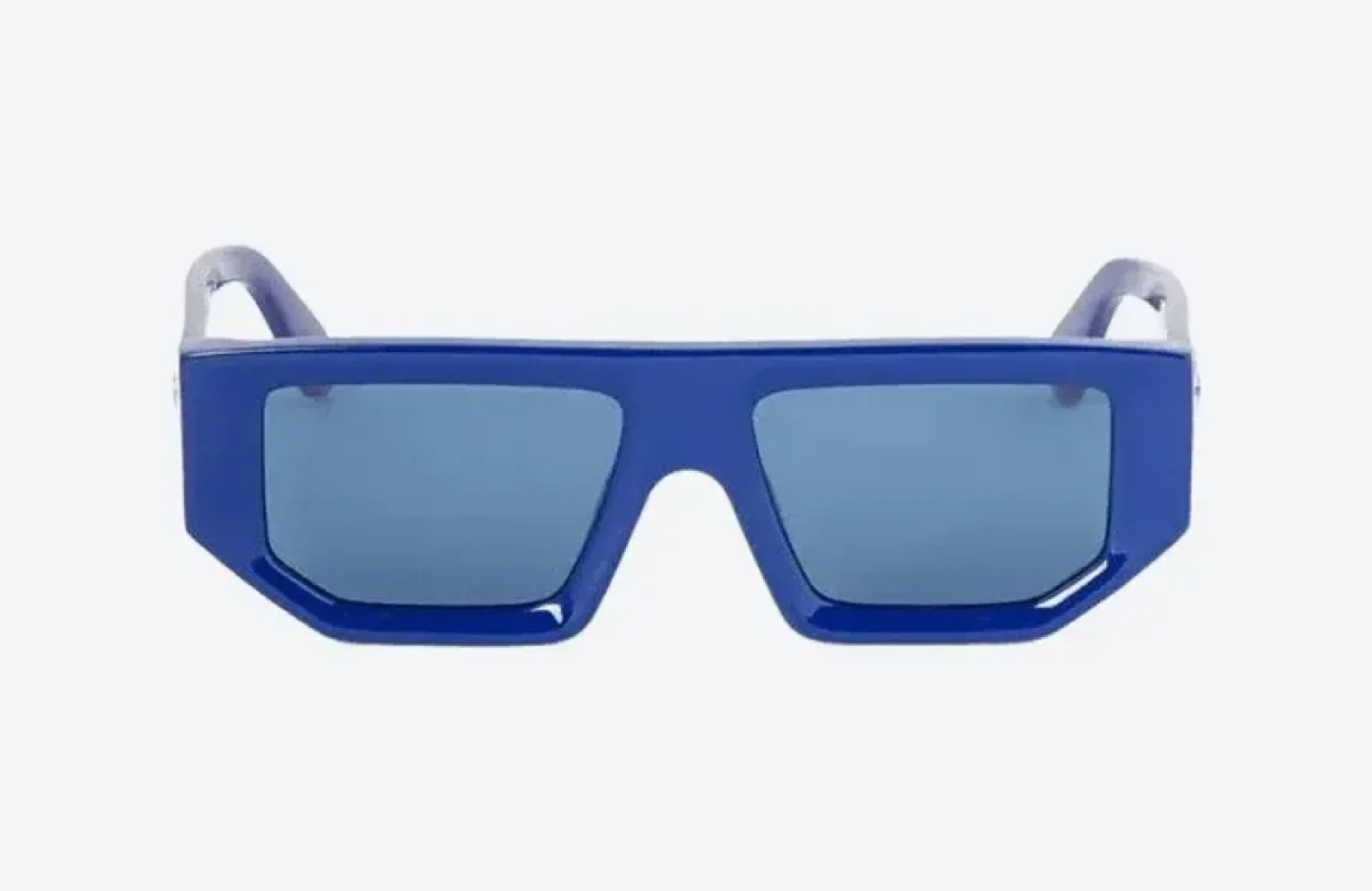
Off-White built its eyewear line the same way it built the rest of the brand: taking a recognizable graphic language, the crossed-arrows logo, and applying it to otherwise classic frame shapes. That’s made the sunglasses genuinely popular in streetwear circles, but it also raises a fair question for anyone about to spend premium money on them: is this a design statement or a piece of proper optical hardware. The honest answer sits somewhere in between, and it depends more on which specific model you’re looking at than on the brand name alone.
The Arrow Logo and What It Signals
The crossed-arrows motif is Off-White’s most recognizable eyewear signature, typically placed at the temple in a metallic or contrasting finish. On authentic pairs, the logo is precisely etched or applied with sharp, clean edges, with no blur and no uneven spacing between the arrow points. Some newer collections have moved away from the arrow entirely in favor of the brand name printed directly on the temple, so the absence of arrows on a current-season pair isn’t automatically a red flag. Just check it against the specific model’s official photos.
Because the logo carries so much of the design weight, it’s also the first place wear tends to show up. Repeated handling, especially picking the frame up by the temple tip rather than the bridge or lens edge, can dull a metallic finish faster than it would on a plain acetate arm. If keeping the branding sharp matters to you, handling the frame by the lens edge when putting it on or taking it off makes a real difference over time.
Acetate and Frame Build
Off-White’s frames use standard-to-good quality acetate, solid enough for daily wear but not positioned as a premium materials showcase the way some heritage eyewear houses are. The value here is proportion and design rather than exotic materials. Frames are generally well constructed for the price tier, with clean edges and secure hinges, but they’re not competing with brands that build their identity purely around frame engineering.
Hinge quality is worth checking in person if you get the chance, since it’s the part of any acetate frame that takes the most repeated stress over time. A well-built hinge should open and close with even resistance on both sides, and shouldn’t feel noticeably looser on one temple than the other. Uneven hinge tension is a common complaint with mass-produced acetate frames generally, not something specific to Off-White, so it’s a reasonable thing to test before buying rather than something to worry about only after the fact.
Lens Protection
Lenses are UV400 rated across the range, which covers the basics of eye protection you’d expect from any legitimate sunglasses brand at this price point. Polarization and prescription compatibility vary by model, so check the specific listing rather than assuming it’s standard across the whole lineup.
UV400 means the lenses block essentially all UVA and UVB radiation up to 400 nanometers, which is the standard baseline for genuine sun protection rather than just a dark tint. It’s worth confirming this rating on the product listing itself rather than assuming a darker lens automatically means better UV filtering, since tint depth and UV protection are two separate properties that don’t always come paired together on cheaper eyewear.
Which Models Are Actually Worth It
The brand’s more architectural, angular frames tend to hold their design value better over time than styles that lean too heavily on a single trend moment. If you’re deciding between two models, prioritize ones with cleaner construction and a shape you’d still want to wear if the logo placement changes in a future collection. It’s worth comparing silhouettes directly in Luxglasshub’s Off-White sunglasses collection rather than deciding from a single product photo, since the arrow placement and frame proportions can look different in person than they do online.
Caring for Off-White Sunglasses
Acetate frames in general hold up better with a few basic habits: wiping lenses with the included microfiber cloth rather than a shirt hem, storing the pair in its case rather than tossed in a bag, and avoiding leaving them lens-down on rough surfaces where the arrow detailing can pick up fine scratches. None of this is specific to Off-White, but because the logo placement is so central to the design, small surface wear is more noticeable here than it would be on a plainer frame.
Extreme heat is worth avoiding too, since acetate can warp slightly if left somewhere like a hot car dashboard for an extended period. A warped frame won’t necessarily break, but it can throw off the fit enough that the temples no longer sit evenly, which is a separate issue from the adjustable fit differences you’d see between models.
Who Off-White Sunglasses Are Actually For
If you want a frame that signals current streetwear relevance and don’t need lab-grade optics or ultra-premium acetate, Off-White delivers exactly what it promises. If your priority is pure optical performance or heirloom-quality materials, it’s a reasonable pass. The value here is cultural and design-driven, not technical, and that’s a legitimate reason to buy as long as it matches what you’re actually looking for.
FAQ
Are Off-White sunglasses polarized?
Not universally. Polarization varies by model, so check the individual product listing before buying if that matters to you.
Do all Off-White sunglasses have the arrow logo?
No. Some newer collections use the brand name printed on the temple instead of the crossed-arrows motif.
Are Off-White sunglasses good quality for the price?
The acetate and construction are solid for the price tier, though the brand’s main value is design and logo recognition rather than premium materials or lens technology.
Do Off-White sunglasses come with a case?
Most current pairs ship with a branded case and cleaning cloth, which is standard for designer eyewear at this price point, though a secondhand or older pair may no longer have the original packaging.
Are Off-White sunglasses unisex?
Most frame shapes are designed to work across genders rather than being split into distinct men’s and women’s lines, though proportions vary enough between models that trying a pair on still matters.